1. Introduction
The software development world is undergoing a revolution, and at the center of this transformation is Developer Tools AI Integration. From automated code completion to intelligent debugging, AI developer tools are transforming the way coders work, making programming faster, smarter, and more efficient.
Developers are shifting towards AI-powered developer tools because they not only speed up the coding process but also help reduce errors, improve productivity, and offer real-time assistance. Instead of spending hours debugging or writing repetitive code, developers can now focus on solving complex problems while letting AI handle the heavy lifting.
The purpose of this article is simple: to help you understand the integration of AI in development tools, explore the best developer tools for AI integration, and show how you can start using them to enhance your productivity.
2. Understanding AI Integration in Developer Tools
AI integration in developer tools means embedding artificial intelligence technologies—such as machine learning (ML), natural language processing (NLP), and predictive algorithms—into the software developers use daily.

These AI-powered tools can:
- Suggest and auto-complete code based on context.
- Detect bugs and vulnerabilities in real time.
- Generate automated test cases.
- Help document APIs and project workflows.
For example, using AI-powered developer tools for productivity can mean having a coding assistant such as GitHub Copilot, which predicts your next line of code, or a debugging tool like DeepCode, which identifies security flaws in real time.
ML and NLP play a huge role here. ML models learn from millions of code samples, while NLP understands programming languages much like human languages—allowing tools to respond naturally to your queries and commands.
3. Popular AI-Integrated Developer Tools
3.1 Developer Tools with AI Code Completion
One of the most popular forms of Developer Tools AI Integration is AI code completion.

- GitHub Copilot: Powered by OpenAI’s Codex, it suggests entire code snippets and functions based on the context of your project.
- Tabnine: Uses AI to predict your next line of code, supporting over 20 programming languages.
- Codeium: Offers AI-assisted code generation and completion, focusing on speed and privacy.
With AI developer tools, you don’t just save time; you also get cleaner, more consistent code. This means fewer mistakes and faster delivery times.
3.2 AI Tools for Debugging and Testing
Debugging can take up nearly half a developer’s time, but AI tools for debugging and testing are changing that.
- DeepCode: Uses AI to scan codebases and suggest improvements.
- Snyk AI: Detects vulnerabilities and security flaws.
- AI-based test generation tools: Automatically create unit tests and functional tests from your existing code.
The benefit? In large projects, these tools dramatically reduce debugging time, allowing you to focus on feature development rather than fixing bugs.
3.3 AI-Driven Documentation & API Tools
Writing documentation is often a tedious task. Thankfully, AI-driven documentation tools like:
- Postman AI: Generates example API requests and automates testing.

- Swagger AI: Creates clean, developer-friendly API documentation.

With the integration of AI in development tools, documentation becomes faster, more accurate, and less of a chore.
3.4 Project Management & Collaboration Tools
AI isn’t just for writing code—it’s also improving team collaboration.
- Jira AI: Automates ticket prioritization and suggests optimal workflows.
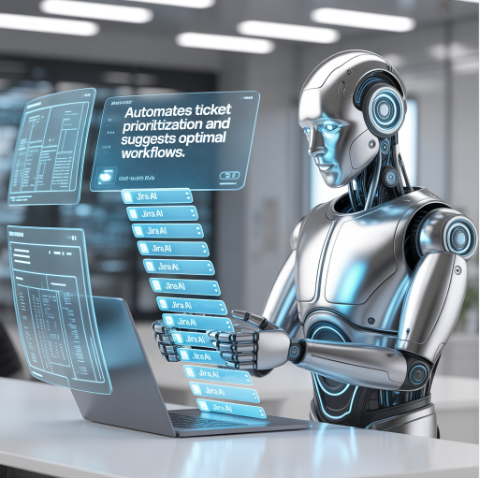
- Trello AI: Predicts deadlines, auto-assigns tasks, and recommends schedules.
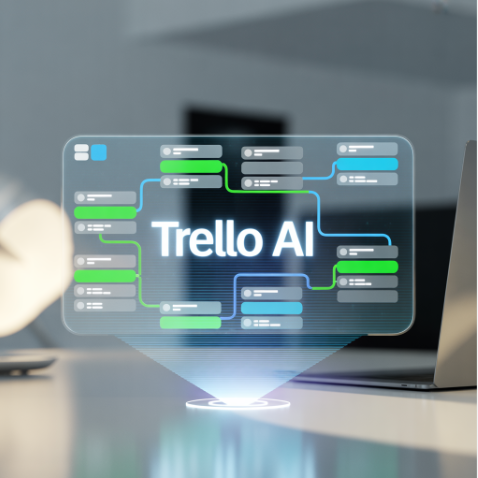
These tools mean fewer bottlenecks and smoother team coordination.
4. How to Integrate AI into Developer Tools
If you want to start using AI-powered developer tools for productivity, here’s how:
- Check AI feature availability in your existing IDE or platform. Many editors, like VS Code and IntelliJ IDEA, have AI-powered plugins.
- Install AI extensions/plugins from trusted sources—e.g., the GitHub Copilot extension for VS Code.
- Connect cloud-based AI APIs like OpenAI API or Hugging Face models for more advanced use cases.
- Set up proper security and privacy controls—ensure sensitive code or data isn’t sent to third-party servers unless necessary.
5. Benefits of AI Integration in Developer Tools
Speed: AI can write boilerplate code in seconds, meaning faster delivery.

Accuracy: Automated suggestions and debugging reduce human error.
Learning: Developers can learn new coding patterns from AI suggestions.
Productivity: Real-world example — a team using Copilot reported 30% faster feature completion times.
The benefits of AI integration in developer tools are clear: faster workflows, fewer bugs, and continuous learning opportunities.
6. Best Developer Tools for AI Integration
Here are some of the developer tools for AI integration and their pros and cons:
- VS Code + GitHub Copilot
- ✅ Easy to install, supports many languages.
- ❌ Subscription cost after trial.
- IntelliJ IDEA AI Assistant
- ✅ Deep integration with Java and Kotlin.
- ❌ Requires JetBrains subscription.
- PyCharm AI
- ✅ Excellent for Python developers, strong ML support.
- ❌ Resource-heavy for slower PCs.
Choosing the right tool depends on your programming language, budget, and team size.
7. Challenges & Limitations
While AI developer tools are powerful, they’re not perfect:

- Over-dependence: Relying too much on AI can limit your problem-solving skills.
- Data security risks: Sensitive code may be exposed if sent to cloud-based AI tools.
- Quality issues: AI-generated code sometimes needs manual review to meet standards.
8. Future Trends
The future of Developer Tools AI Integration is exciting:
- Fully autonomous coding environments where AI builds entire apps.
- AI-driven cross-language translation, allowing instant conversion between programming languages.
- AI-assisted AR/VR development workspaces for immersive coding experiences.
9. Conclusion
Integration of AI in development tools is no longer optional—it’s becoming a necessity. From developer tools with AI code completion to AI tools for debugging and testing, the productivity gains are undeniable.
Experiment with these tools, find what fits your workflow, and remember: AI should be your coding partner, not your replacement.